


I woke up this morning, like I do every morning now, in a fog of fear and exhaustion, another sleepless night behind me and another interminable day of pain ahead of me.
I have never known such deep, gnawing desperation. It wants to howl its way out of my body, hit things, claw at my face, punch the pillow. Please! Let me sleep!
I’m drowning in this desperate wanting.
I get in a hot shower, letting the water wash over me, wash the edge off my pain, so I can pull myself together and show a brave face to my boys, at least for a few minutes. They don’t need to see me like this. They don’t need to know how bad this is getting.
After my day in the ER, I spiraled steadily downward, caught in a worsening cycle of pain, exhaustion, and insomnia. We had nowhere to turn except for the two little words I had stumbled out of the ER with: occipital neuralgia. They were like two sturdy, competent little hooks that we could hang our hopes on, because they meant that there might be options for pain relief in the form of medications, injections — nerve blocks to numb the occipital nerve — or other treatments we didn’t yet know about.
Hopes firmly hung, Jason set out to find someone, somewhere, who could help me. But the whole world was in lockdown, and medical care was only available for life-threatening cases. I was not in any danger of dying, so my situation, as painful as it was, didn’t qualify as urgent.
But Jason wouldn’t let that get in his way. He turned up that intense, get-out-of-my-way-I’m-going-to-change-the-world, drive of his and doggedly searched for anything that might help. He spent hours on the phone every day, his voice filling our house with both his love and his fear, as he chased down ideas, practitioners, and physicians. And he succeeded. Not just once, but again and again.
First, there was the kind local acupuncturist who agreed to treat me despite the lockdown regulations that said she couldn’t. This was The Butte, and people really care about one another, so she stuck her neck out for me. But she gave us clear instructions for discreetly entering and exiting her office to avoid being seen. We parked on the street and waited, watching for an opening when no one was walking by. When the moment came, we got out of the car and walked as furtively as we could to her office—like we were buying drugs rather than getting acupuncture. If I hadn’t been in such bad shape, Jason and I would have laughed at the absurdity of it.
I wish I could say that her treatment helped. We desperately wanted it to. But it only increased my pain.
Next, there was the pot — or weed, as younger people like to call it now. Jason read about a kind of smokable CBD that could be helpful for occipital neuralgia. It’s not hard to find marijuana in a ski town in Colorado, even in the midst of a global pandemic, so he managed to get his hands on some.
I’ll never forget the shock on our older son’s face when we came down to his room and asked to borrow his bong — the one he thought was well-hidden from us in the depths of his closet. The four of us sat outside on the deck in the April chill, laughing uproariously at my first ever attempt to use a bong — and at the insanity of an eighteen-year-old being asked to teach his mother how to smoke weed.
The laughter helped a little. The weed, not at all.
Next came the prescriptions for pain and sleep. Over the course of the next four months, I tried so many of them that they became etched in my memory — a parade of weird, surreal names and memories.
Methocarbamol
Amitriptyline
Gabapentin
Trazodone
Oxycodone
Cymbalta
Ambien
Our little family rode a fragile wave of hope with each new prescription, only to have those hopes repeatedly dashed as my body and brain rejected every drug, often responding with adverse reactions. Sleep drugs gave me more insomnia. Pain drugs spiked more pain and made me feel strange and awful.
Morning after morning, my boys woke up hopeful, looking for signs that the latest drug had helped — signs that maybe, just maybe, I looked or sounded a little more like their mom. But morning after morning, they emerged from their rooms and saw that I was worse rather than better. Their faces fell, their shoulders slumped. And my heart broke a little more.
As lockdown went on, medical care became a little more available for cases like mine (non-life-threatening but utterly miserable cases), which launched us into what I call my parade of injections — three different days, three different doctors, three failed attempts at lessening my pain. Three ugly inflection points in a devastating downward spiral.

We checked into the hospital an hour ago, Jason lying about the lingering, persistent cough he’s had since Covid. I’ve never heard him lie before. But he’s so desperate to see me out of pain, I think he would do almost anything.
I’m lying face down, waiting for the doctor to plunge the first needle into the base of my skull. My body hums with the anticipation of relief from the constant pain.
The needle pushes into my occiput.
CRUNCH.
The sound is weird and loud, reverberating around my head. The pain is exquisite. But I don’t care. Hope is a powerful analgesic. I let it flow freely through my veins, imagining the weeks ahead. The healing sleep, the blessed relief.
CRUNCH.
CRUNCH.
Who knew such a sound was possible in my own head?
It’s been three weeks since that first round of injections, the surreal crunching into my skull. But the relief never came. The hope seeped out of my body, leaving me limp with disappointment. I’m too exhausted and discouraged to try again.
But Jason wouldn’t give up. So today I’m scheduled with a new physician, this time for an injection into my upper cervical area.
I step out of the car at the hospital and take in the blue sky, the bright sun, and the people walking around looking so normal. I don’t remember the last time I felt normal. I can’t even remember what that’s supposed to feel like. Feel like in my body, my brain, my life. I haven’t left our house in weeks. My life shrank and shriveled and caved in on itself. Life went on without me, doing all its normal life things, and I’m shocked by it. Some part of me can’t believe that’s even possible.
Now I’m face down on the procedure table. The physician is an arrogant, athletic-looking “dude,” and his fake-jolly, loud chatting jangles my brain. I so badly want this to be over. I don’t have as much hope numbing me this time. I have even less when he expresses dismay at the ultrasound image of the two fillings in my teeth that are somehow obstructing his view of my upper cervical spine. I don’t understand how this is possible, but I can feel his fear and uncertainty reverberating in my body.
Shit. He doesn’t know what to do. Every nerve in my body goes on high alert. I can hardly breathe.
I can see his blue bike shoes through the hole in the table. They’re the kind you wear around town, but still. I stare down at those shoes for a whole miserable, painful hour while he bungles and bumbles his way through the procedure, covering up his incompetence with bluster.
I can’t stop wondering….Why bike shoes? Are you planning to dash off for a bike ride as soon as you’re done messing with my body? What the hell?
The second nerve block was no more successful than the first. It too provoked more pain, worsened my insomnia and sent me spiraling further and further downward. My legs can barely hold me up long enough to take a shower. I can’t walk more than fifty feet. My body is atrophying, my arms like useless sticks as I become more and more afraid to use them, to provoke the pain in my neck and head. My brain is foggy and heavy, and I can hardly concentrate on anything at all. Every movement, every activity, every kind of stimulation provokes pain and symptoms. So I avoid everything.
I’m at a surgery center five hours from The Butte for yet another attempt at a nerve block–another injection, but this time even lower down my neck. The trip here was agony. My neck and the back of my head were already on fire before we left home. The whole way here, I braced against every turn and bump, rigid with dread, anticipating the sea of pain that I know I’ll end up swimming in.
By the time we arrived at the surgery center, my brain was a foggy mess and I was struggling to hold back tears. The world is still in lockdown so no one was allowed to come in with me.
I’m in an exam room, staring down at the impossible ream of intake paperwork. I can’t concentrate, can’t make sense of the words on the pages. How can I possibly get through this?
A nurse comes in. Her name is Karen and she has the kindest green eyes above her mask, kindness that’s bringing tears of relief to my eyes. She has bright red hair tied back in a colorful scarf, a lovely German accent, and playful clogs in a swirly green and pink pattern.
She holds my hand and says, “It’s Ok. I’ll help you. I’ll stay with you.” A warm wave of relief washes over me, softening my fear, my desperation.
She hardly lets go of my hand the whole day, even while I’m facedown on the procedure table, and even when yet another handsome, arrogant physician rolls his eyes at her.
I stare at her colorful clogs through the whole procedure. Karen, my lifeline on a dark, dark day.

I knew even before I got home that the third injection was no more helpful than the first two. My pain increased, my sleep worsened, my sensitivity and overwhelm skyrocketed. I was out of options. And out of hope.
For the next three months, fear engulfed me, its hot tongue licking my body, my mind, my spirit. I collapsed under its incessant presence. I was so afraid of provoking pain that I almost completely stopped using my hands, arms, shoulders and neck. I didn’t turn my head more than a few degrees in any direction. My family looked on in horror as I became a rigid, weak version of myself, my arms so weak that I could barely hold a cup of tea or pull the sheets up to cover myself.
Jason did everything for me. He ran the baths that were my only respite from pain, adding the Epsom salts that we hoped would loosen my rock-hard neck muscles, and helped me walk the twenty feet from my bed to the bath. He blow-dried my hair, slowly running his hands through it, the tenderness of it making me ache. He opened the sticky back door for me—the one I could no longer open by myself—so I could come inside after sitting in silence on the deck on a sunny day.
He made my food, helped me get dressed, helped me move from one place to another for a change of scene when I needed one. He sat quietly with me to ease my loneliness whenever he could spare a few minutes from caring for our boys, our home, our three dogs and our herd of four horses.
I could no longer tolerate any stimulation at all, so I hid from any kind of noise: the blender, the rumble of the boiler when it came on, the vibration of the machine Jason used to clear snow and manure from the corral. Jason and the boys tried their best to minimize noise, always talking quietly, not laughing too loudly, not playing music.
A sad, frozen hush settled over our little house.
Even the vibration of words overwhelmed me — those elemental building blocks of human togetherness and connection. Whenever my brain heard words, whether someone else’s or my own, a strange nausea and fogginess rolled over me. It felt like my brain had a daily “word budget” and if I went beyond it on any given day, whether by listening or speaking, it would send me into a tailspin — and it wasn’t thousands, or even hundreds, but barely tens of words per day.
It was especially bad when I used my own voice. Speaking made me feel so awful that I shrank away from people, even my most beloved people, almost completely.
I talked less and less until I was almost mute — my neck, mouth and jaw painfully tight with unspoken words, unspoken agony.
Fear of movement froze me into stillness. Fear of noise and words sent me into silence. I barely moved and barely spoke. I spent my days either lying in bed (always and only on my right side), sitting in a hot bath, or bolt upright on a firm chair or couch.
It was like an enforced silent meditation retreat. From hell.
But I didn’t choose it, didn’t know how to meditate, and didn’t have the emotional infrastructure for any of it. At least not yet.
Is it any wonder I lost myself?
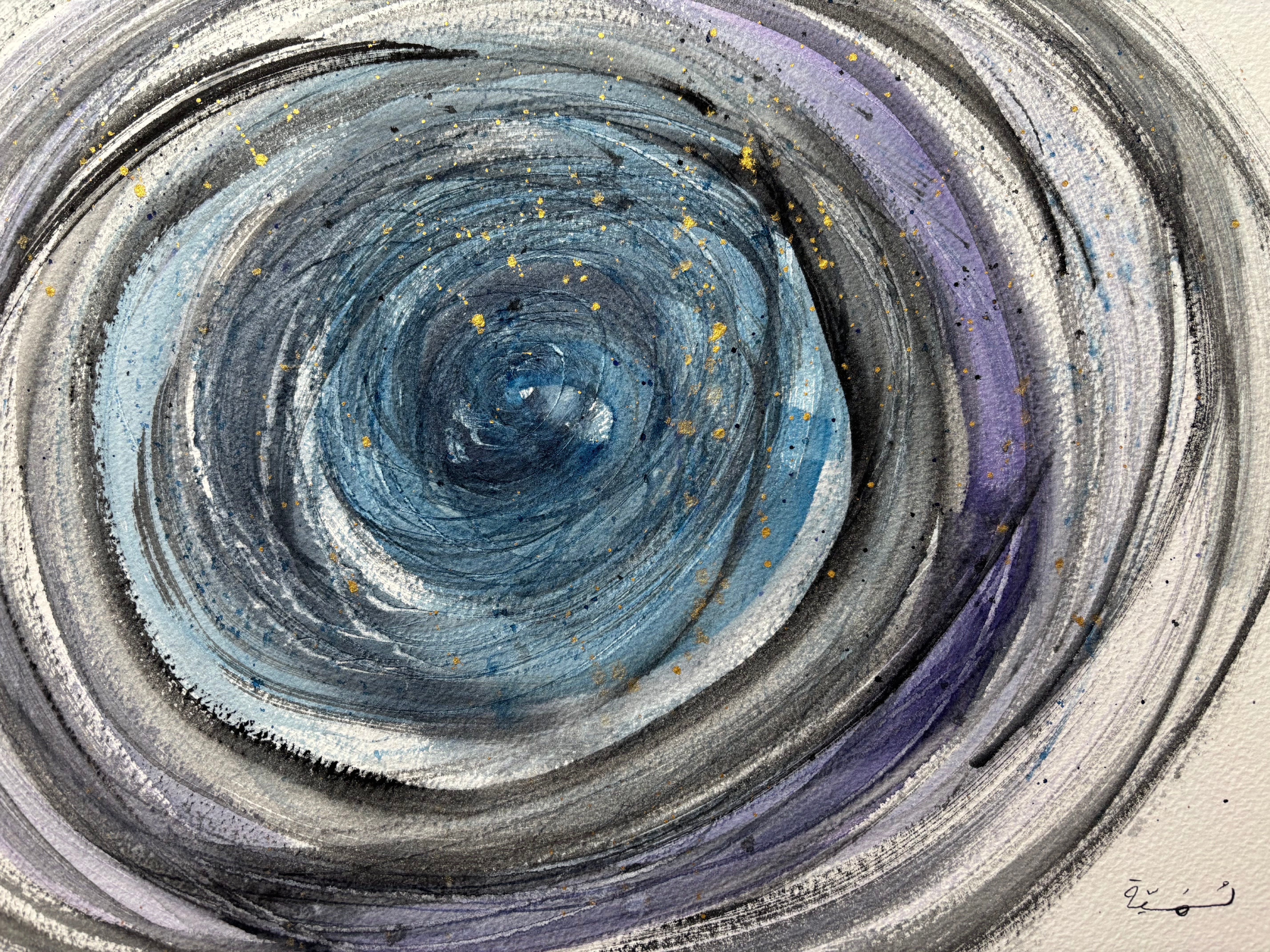
Dear Fear,
You’re a thief.
You steal joy. You steal gratitude. You steal delight.
You steal life.
I grew up in a war zone, your hot breath on my neck from my earliest memories, so I thought I knew you.
But I didn’t.
I had no idea that you could take my mind so fully, that your corrosive taste could seep into every thought, every moment of possible connection.
I had no idea how completely you could take hold of my body, gripping and squeezing, holding me in your ugly grip like a vise, my hands curling into unfamiliar claws, moving involuntarily, dancing to your tune rather than mine, my body curling in on itself.
And I had no idea how hard it would be to loosen that grip.
You robbed me of time. You robbed me of me.
You stole me in the dead of night, and I woke up shocked, bereft that I couldn’t find myself and wouldn’t for a very long time.
I hate that I gave myself to you so completely. I hate that I let you be that powerful.
But it was maktoob. Written. Fated.
I was meant to see your face, exposed, naked and ugly.
That seeing would leave me changed. And it would open my heart in ways that were mine to claim.
And never again yours to steal.

If you’re new here, welcome!
However you made your way here, I’m grateful you found me and happy to have you pop into my little world, whether it’s for a brief visit or a longer hangout around my campfire.
Accidental Alchemy is a serial memoir, so if you’re curious and have the time, I recommend starting with the Prologue and reading chapters in order for the full experience. You can access all chapters on my Substack homepage.
For the best reading experience, I recommend reading in a browser and on a larger screen. It makes it easier to enjoy the art and navigate through the chapters with the buttons at the bottom of each post.
If you’re enjoying this memoir, please share with someone you love!
PS.. All art and poetry included in this memoir are my own unless I specifically credit another author or artist.
Oh Sus, hearing your narration makes this even more powerful. As other commenters have said, it feels like such an honor to be allowed to witness your struggles. Remembering how bad it was then highlights how much better things are for you now. Makes me appreciate again how far we've both come. ♥️
Something tells me that now, you are so very very unafraid.
The way you transmute your experience is astonishing. I am right there with you, looking at the shoes, gripping the corner of the table. It is an honor to witness your journey. And I think of us all holding space for you even now, after the darkest times.
Whatever this is, the body snatching fear that descends upon the brightest of souls, it feels like only a master dragon warrior could make it through.
And you did. And you are. Unbelievable.
And warriors, I think, know when to fight and when to surrender.
I await the next chapter with a prayer to you and your healing and gratitude that you are sharing.
🙏🏻❤️